Talking dirty: quitting and failure

I recently did a mountain bike race with a friend, who had crashed out and quit part way through. When I found out that the crash hadn’t precluded him from carrying on, I innocently asked why he’d stopped, and he got defensive about it. So then I asked him why he was getting so defensive (I can be really annoying), and he said he didn’t know – since the only reason was that he’d just felt done for the day and had nothing to gain by carrying on.

Another friend of mine quit a trail marathon a while back. When I asked her why, she said she had good reason – it was a C race for her, it was pouring down, she was soaked head to toe and freezing just a few miles in and just didn’t think it was fun anymore. She quit out of misery; she knows it was the right thing for her to do at the time; but she’s still “bummed I quit”.

The one and only time I’ve ever quit a race was at the CRCA Bear Mountain Classic, in 2018. I lined up at the start in a cesspool of negativity – tired, coming off a string of bad races, and fully expecting to “fail” (hills aren’t my thing). No more than 15 minutes later I’d got dropped on the first hill and stopped biking, my heart pounding through my chest, my mind and body crushed with defeat. I saw my husband riding towards me and, with tears of failure welling up inside, turned off the course and into the comfort of his draft.

Were my friends wrong to quit? Was I wrong to quit? Why?

To put my conclusions first: no; yes; and, depends on what and why you’re quitting.

What are you quitting: by which I mean, what was your goal to begin with? What improvement were you trying to make? Are you quitting an outcome, or the journey?

For example, let’s suppose it’s for a specific placing. Pros quit races all the time. If their goal is to finish in the money and quitting on a bad day means they save their body for a good one, then that makes sense.

On the other hand, let’s suppose your goal was to finish a race as best you can. Do you want to quit because you think you have “failed” your goal? Then – even if you’re missing a hoped-for time or placing – then quitting can often deprive you of a perfectly good learning opportunity. If it’s so hot you can barely think, or your legs are so tired you’re pedaling squares, or that nasty mid-race hill gets the better of you, then maybe it’s worth figuring out how to deal with that. What does your body and mind need to be able to get through those circumstances? Adversity is a great teacher, and in my view at least, the better someone can manage adverse conditions, the more respect they deserve as an athlete.

Why are you quitting: are you physically suffering to the point where if you continue you could get sick or injured? If yes, then quit. Are you suffering in a way that will ultimately have negative, not positive repercussions – i.e. the suffering outweighs any benefits you could possibly hope to get out of the race? If yes, then quit.

Do you have that voice in your head that says, “I just can’t do it. I need to stop”? If yes, then hold on. As postulated by the central governor theory your brain will signal you to stop as a way to protect your body. Put another way, allow for the potential that you can do more than you thought. Are you quitting because you feel miserable and defeated? If yes, then hold on. Learn to pick yourself up off the road. Look for solutions to keep going. Stay positive.

To quote from the poem “If”:

If you can force your heart and nerve and sinew
To serve your turn long after they are gone,
And so hold on when there is nothing in you
Except the Will which says to them: ‘Hold on!’

Back to the opening examples.

My first friend is an expert mountain biker. He was in the race to win and at the same time had nothing to prove, having won it the year before. The crash was bad – it took him a decent amount of time to figure out how far he’d somersaulted from his bike, make his way back to the start, un-mangle his bike handlebars and get back on. Was he fine to continue, medically speaking? Yes. Could he have gained some incremental fitness benefit by carrying on? Sure. Did he demonstrate a lack of tenacity by not doing so, thereby rendering himself a “bad quitter”? Hell no. Tenacity is his middle name. He simply felt somewhat shaken by the crash and didn’t have his head in the game after that.

My second friend is a top age group Ironman competitor and also tough as nails. It would have been great if she’d completed the race, as it was a new experience and a perfect early-season fitness-builder. But if you’re at the point where you’re so cold you’re physically unable to push your body in a healthy way, then seriously, just stop already. And if you’re not having fun in a race where your primary goal was, in fact, to have fun, then how about you just table it for another day…

I was at the start line of a race that would have increased my fitness had I worked hard and finished, whether on the back, off the back, or even waaay off the back for that matter. I had come to the start line defeated before I took my first pedal stroke and failed to find the mental fortitude to overcome it. Worse still, my misery was driven not by physical discomfort or injury, but by a narcissistic and misplaced presumption that being off the back would be utterly shameful.

To quote “If” again:

If you can meet with Triumph and Disaster
And treat those two impostors just the same…

Right on. I quit because I was unable to do that. That was a fail.

In the end, I really like the way my coach puts it: you need to find “just the right amount of striving”. Not so little that you throw away the potential for gain; not so much that vainglory trumps real achievement.
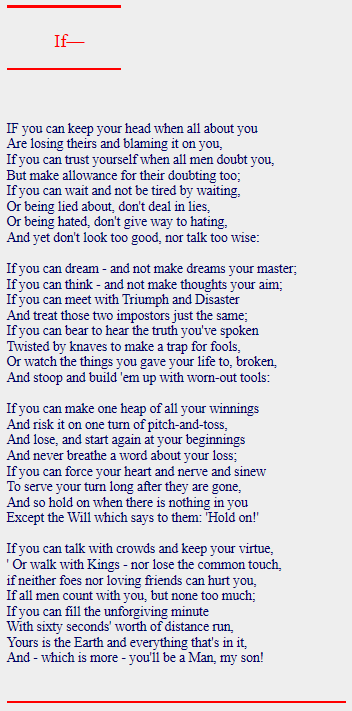
“If” by Rudyard Kipling

Finding just the right amount of positivity

One of the hardest things I had to contend with when getting into bike racing was negativity. There’s plenty of opportunity for it.

First, with such a small community of women racers, your placing is visible to all and people care…this is strange when coming from the world of triathlon, where it’s all about your personal effort and you can literally have no idea what position you’re in from start to finish of a race. That’s pressure right there. Then there’s the whole “you have to get picked for a team” thing (I thought I could pick one, just like a running club!) that had my anxiety through the roof. Then there’s the misery that is being positioned well for the entire race, only to completely blow it in the last 200m. Or just not quite being able to hold on, and off the back you go. That doesn’t happen in triathlon either. Yet more reasons to feel crappy about oneself.

The key is, to come in with the right attitude; “right” being the one that keeps you calm, motivated and enjoying the sport. For me it’s about staying focused on my goals & not letting my competitive monkey brain get the better of me. It’s about remembering how much bloody fun it all is…it’s also about “positive thinking”, defined most broadly as having an optimistic attitude.

There’s a mountain of articles out there about the benefits of positive thinking. It improves quality of life, resilience to bad situations, and improves the mind’s ability to learn. From an athletic perspective it can directly improve your race times.

Some classic positive thought mantras for races are “I can do this”; “shut up legs”; or “this is what you came for”. I personally don’t find that these kinds of mantras help me that much though. Trying to believe in them feels like I need to do this big mental leap which drains me of energy. I can’t seem to link the intellectual sense of positivity to any physical one; in fact such thoughts take me further away from what my body is feeling, and once I lose that connection, I find hard efforts exponentially more difficult.

The self-talk that works for me is a little more neutral. I seem to gain most strength from observing and accepting what I feel. For example, during a race I’ll think, “hmmm, the pain in my legs is truly horrendous”, or “f*ck this f*cking sh*t, I should have just stuck to running”; but then I’ll think, “OK, so what can I do about that?” And then I just do it.

I perused a few articles on the subject and found some which could potentially explain this. I found two studies, here and here which explain how mental fatigue can undermine athletic performance. In addition both the former of those (in paragraph 3.4.5) and this one discuss how emotional suppression can hinder performance. For me, trying to “think happy thoughts” whilst dying a slow death in zone 6 most definitively constitutes emotional suppression.

Positivity to me means, not being defeatist, but focusing on the present and what I can control to keep going. Maybe it’s a rather British understated type of positivity; but in any case, it works for me.

Why I’m falling in love with crit racing

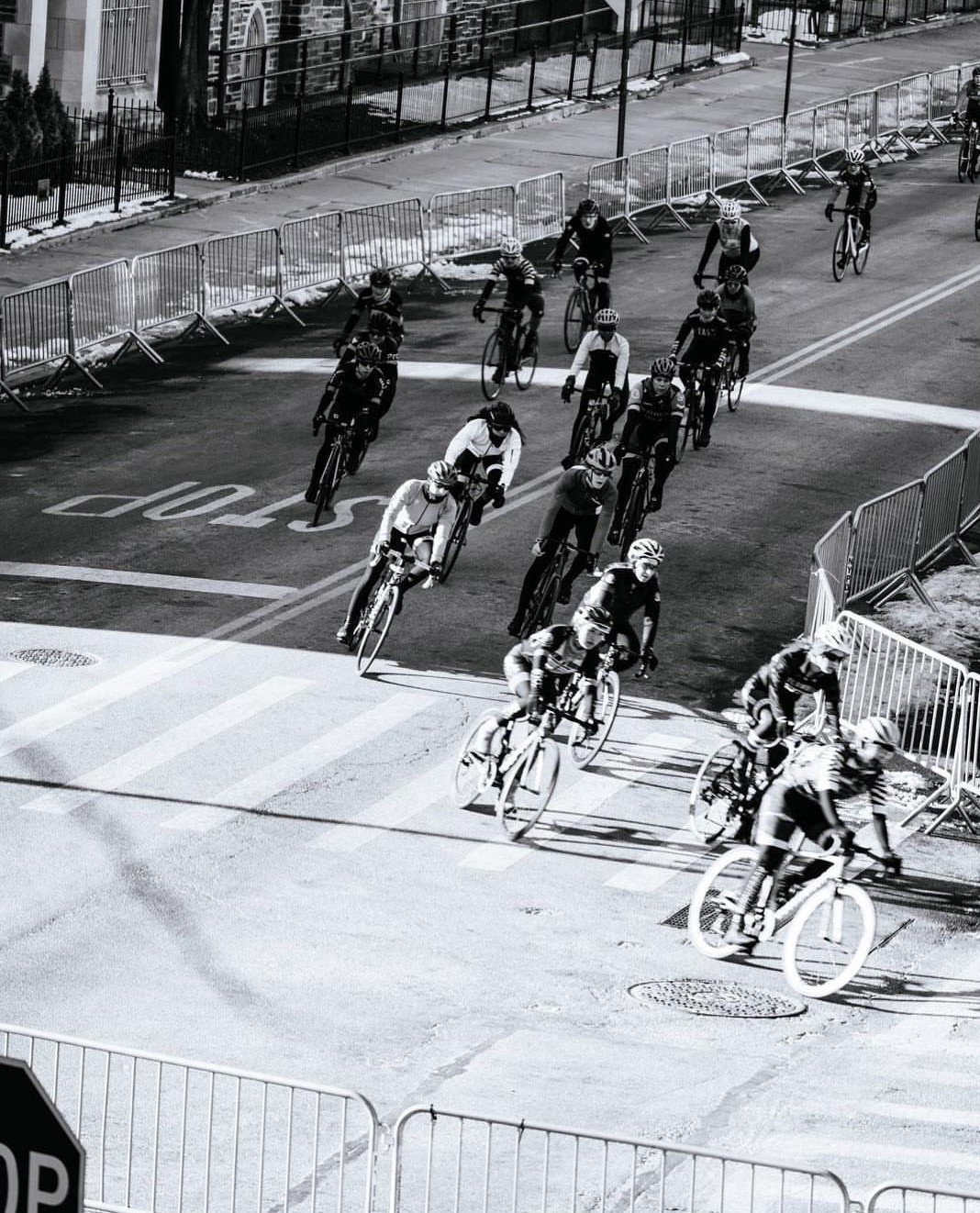
Rewind almost one year ago to the day, I was starting my first full season of biking and Grant’s Tomb Crit was the first race on the calendar. I’d never done a crit before, and yes, I was terrified – mostly of being unable to stay with the pack. I got to the start line of the Cat 4/5 race dead tired from the week, frigid cold (temps were sub-freezing) and not properly warmed up, thinking that somehow, I could do that during the race (?!). Two laps of blistering intensity and yoyo cornering action later, boom, off the back with my heart coming out of my chest. Luckily, I’m a stubborn little thing and – determined not to have that be my entire experience of a crit race – I got to the start line a second time for the Cat 3/4/5. This one felt easier, I guess because I was warmed up, but I still came pretty much last, and the blistering pace and technical nature of it still rattled my nervous system so much that I left the day with the same feeling I’d arrived with – utter dread of crit racing.

Fast forward to yesterday, and I’m back at the start line of Grant’s Tomb. The nerves were there but this time I felt more positive. I’d realized how strange it was that I used to have no problem killing myself in a 10k run race – in fact that was my favorite distance – but somehow on a bike I felt so much less “comfortable with uncomfortable”. I set myself two mantras for the day – “stay positive”, and “just like a 10k”. Combined with a year’s additional race experience, I did much better, not placing but staying near the front all race, taking corners smoothly, and only falling back on the last couple laps as I didn’t quite have the strength to stay in contention for the sprint.

I left happy! More importantly, I left wanting more. Eyes up look ahead? –no problem in a crit, easiest ask ever! I love how crits force you into the present so that all your senses awaken; and how they force you to breathe efficiently so neither your body nor nervous system crash. I love how technical it is and how every lap you get to figure out how to improve just that little bit more. The only price for admission is, as Steve Cullen from ButcherBox Cycling puts it in the funky short American Crit, “you just need to work so hard you wanna die”.

Grant’s Tomb Crit – I’m near the front and smiling

I love how this kind of race is so at home in the urban environment. I showed up at two more crits last year – Orchard Beach up in the Bronx – a chance to get some springtime sea air, and Lime Rock Grand Prix, a super fun course up in Connecticut. I got a kick out of the fact that’s a real car racing track – especially when I flatted and took a pit stop, where a mechanic changed out my wheel and pushed me back into the race! I’ll be trying a few more local ones this year, and I really hope Red Hook crit gets revived in 2020 for spectating purposes. There’s clearly a rich history of crits and a vibrant race scene in the U.S. that I’d love to see more of.

Teammates on the battlefield. The setting can’t be beat

As far as race goals are concerned, I developed well enough over the last year to go from “off the back” to “in the game”. This year I hope to progress to “in sprint contention”. My limiters are still fairly all-encompassing at this point:

  • 30s/1min power;
  • Sprint technique – I have a vague idea what to do but no experience and never practiced;
  • Improving my mental ability to push hard on a bike – even if my legs are learning to crank out higher power, my mind is still stuck in what I’ll call “Ironman mode”, where pacing is king and there’s really no need for a sprint finish, and certainly no need to go sprinting like a maniac in the middle of a race…

I also look forward to getting good enough to participate in the same race category as my teammates!

On the fun side, reading about Red Hook Crit, and more generally learning about track racing as part of my coaching study, has led me to sign up for an Introduction to Track Racing Clinic at Kissena Velodrome later this month. Give it a go, why not – and I’ll have to try at least one race after that.