Imagine you have the choice of purchasing two used cars. They’re both the exact same type, engine size and age, but one has been serviced more than the other – for example it has better wheel alignment and the pistons and sparkplugs are less worn. Naturally, we would choose to buy the better serviced car as the risk of breaking down is lower and we’d expect a more efficient use of fuel. So, why settle for less when it comes to our own body?
In human equivalent, we’re talking about the movement of joints and soft tissues – muscles and fascia. If those tissues are tight or become scar tissue through traumatic, repetitive motion or overuse injuries, they will be less efficient at storing and releasing energy. That means less watts.
As members of a bike team that would quite prefer more watts than less, my teammates and I enlisted the help of Dr. Marc Bochner from Bochner Chiropractic to teach us a solid prehab routine. Marc has been treating amateur and professional athletes in the NYC area for over 20 years. I’ve personally needed him so much that I wouldn’t still be training without him; our resulting friendship has been a major upside.
Prehab(ilitation) refers to the self-care routine we can follow on a periodic basis to monitor and treat our weak links, before injury takes place. Depending on the state of our bodies, such routine can require a series of professional treatments, or simply take 10-15 minutes before each workout. Marc has developed a program called Prepare to Compete that provides athletes with a simple but structured approach to such injury prevention. This program is designed to maintain and/or improve three key areas, as follows.
Posture (also called form)
Good posture implies that the body at initiation of movement is in a strong, balanced position. The key limiters are tight or injured muscles so key protocols here are:
- Professional care, such as chiropractic care, active release technique (ART), or physical therapy
- Self-muscle/fascia release (i.e., put the T.V. on & get out the foam roller)
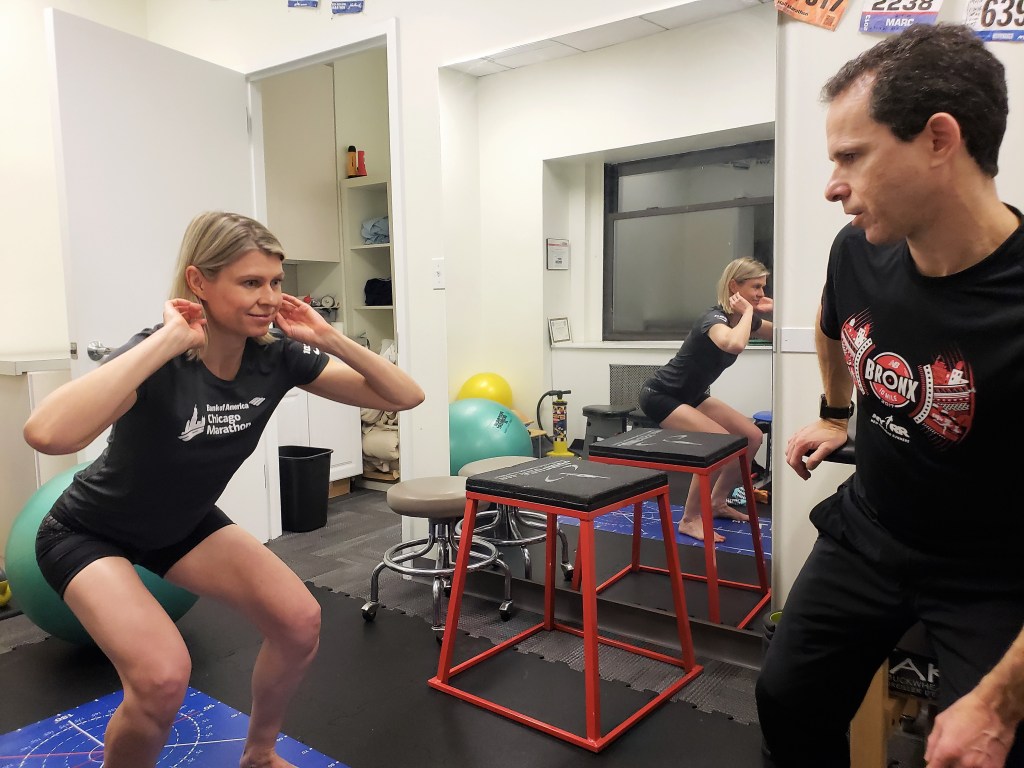
Range of motion (also called tension, flexibility, or mobility)
Good flexibility means that we can move muscles and joints through their full range of motion such that force production can be optimally converted to power. One often-overlooked aspect of this is our breathing – without proper breath technique the deep stabilizing muscles won’t activate; furthermore, poor breath technique can reinforce poor posture and muscle tension. Self-care exercises should include:
- Abdominal breathing exercises – inhalation should expand the diaphragm and support the spine; exhalation helps power generation if timed properly;
- Pelvic tilt and neutral spine activation
- Core stability exercises such as dead bugs, all-fours, etc.
- Pre-exercise stretching, both active (repeated short hold periods) and dynamic (use of sport-specific motions)
- Post-exercise static stretching and/or yoga, where warm muscles are held in a stretch for a longer period
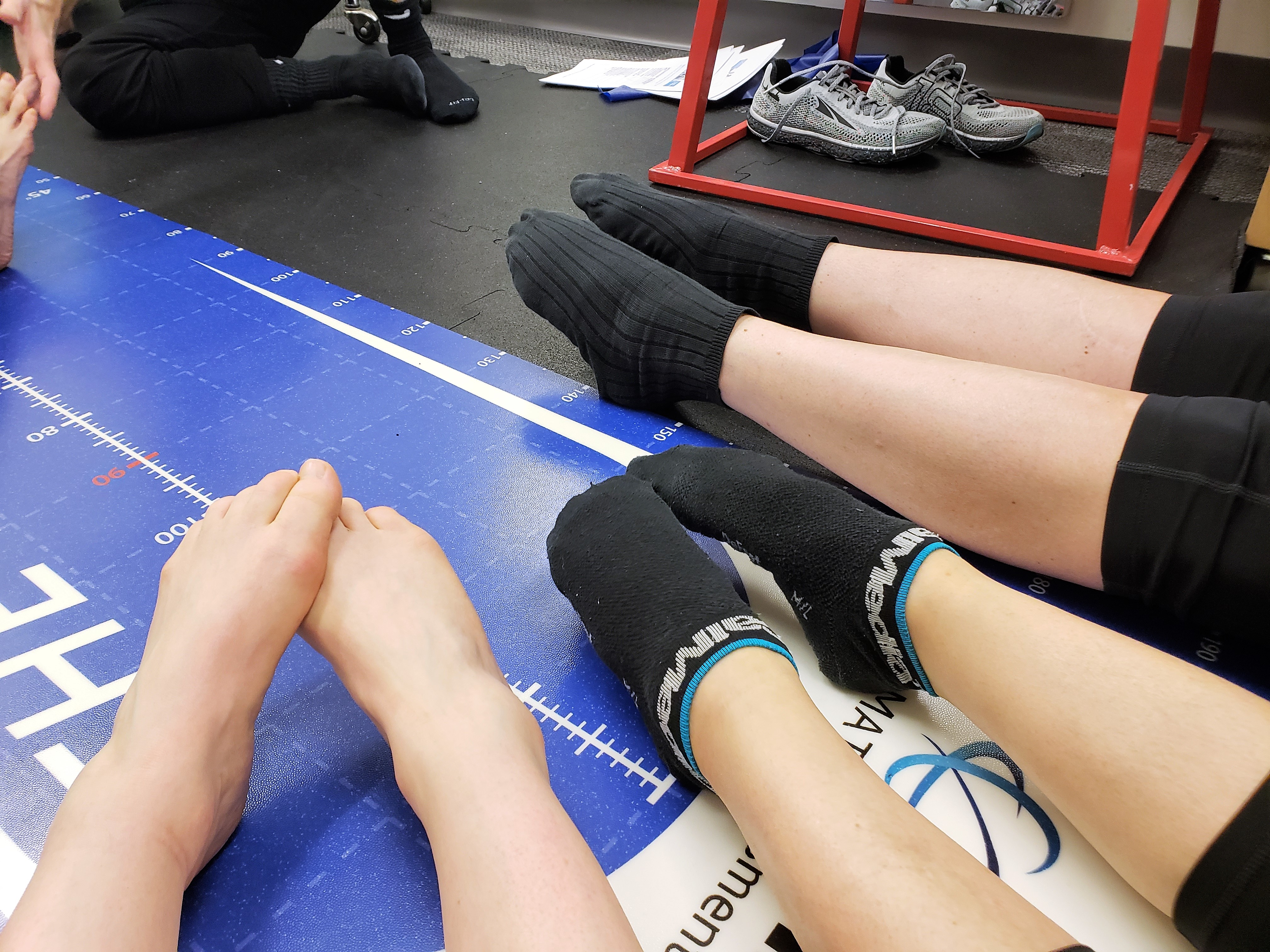
Movement control
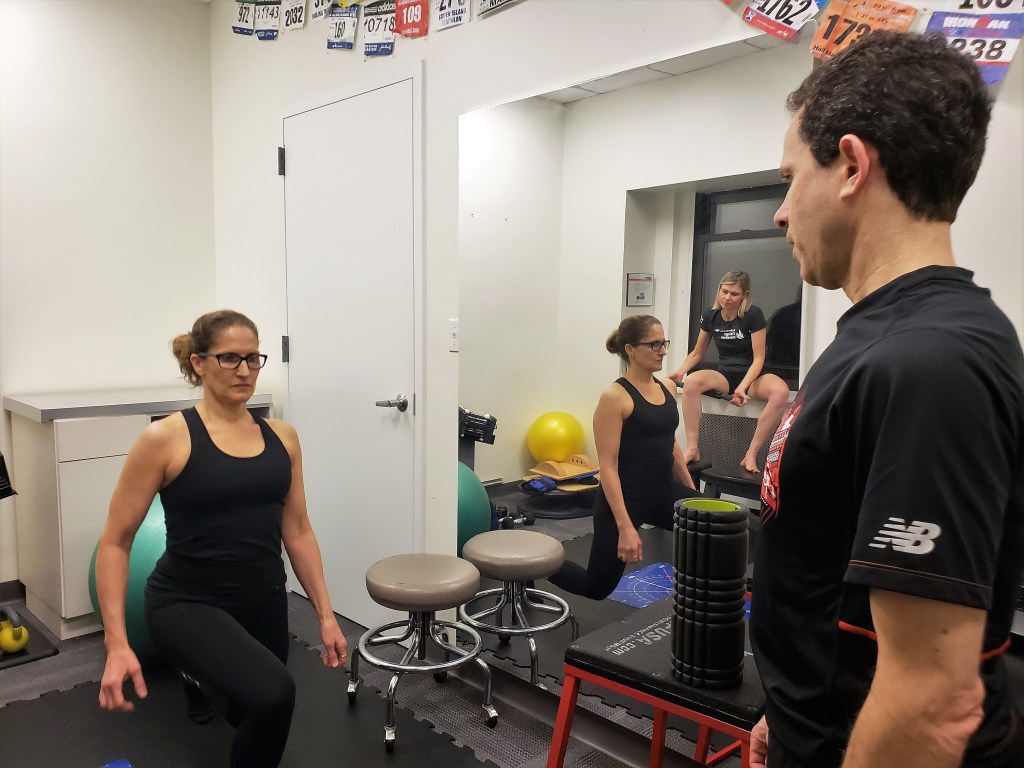
A high quality of movement control implies efficiency of muscle recruitment. For example, when you move your leg backwards from the hip, the gluteus maximus and deep core should contract first, not the superficial lower back muscles. This avoids excessive strain on a single muscle which was not designed to carry out that movement in isolation; it also means greater force production. Seven key exercises require maintaining the first two concepts above through movement:
- Rocker board balancing
- Single-leg standing (with or without eyes closed)
- Standing knee hug
- Lunges (front, side, rear, front with rotation & oblique)
- Side raises
- Single leg squats
- Push ups
How prehab links to bike fit
I can’t explain better than this blog post from Fit Werx. Posture breeds comfort; flexibility aids aerodynamics; movement control generates power.
Positive reinforcement through daily activities
A key point I often forget is that while it’s all well and good to practice good movement patterns as part of our workout routine, about 90% of our days is actually spent doing other stuff, and that other stuff often involves a lot of sitting or standing around with plenty of room for reinforcement of bad postural habits.
- The dangers of sitting have been well documented. Luckily Marc provides some handy desk exercises that can help without looking too silly.
- A bus or subway commute is also a great time for a few exercises:
- reinforce good posture by fully engaging the core and upper back muscles
- stand on one leg for 30 seconds at a time
- practice glute engagement (squeeze your butt)
You never know, that last one might also land you a date.
 Eyes Up, Look Ahead